
Choose the Right Flooring for Every Raleigh Room With Artisan Flooring of NC: A Guide to Hardwood, LVP, Laminate, and Refinishing


Key Takeaways
- The best floor for a Raleigh home depends on the room’s moisture exposure, traffic, comfort needs, and subfloor condition.
- Hardwood can be an excellent fit for living areas, bedrooms, dining rooms, and hallways when indoor conditions and installation details are properly managed.
- Luxury vinyl plank, often called LVP, and other waterproof options can be practical for bathrooms, laundry rooms, kitchens, basements, and busy households.
- Subfloor preparation, moisture checks, transitions, and expansion space are as important as the material selected.
- Existing hardwood may be a candidate for repair, sanding, and refinishing instead of full replacement.
Choosing new flooring is about much more than finding a color that looks good in a sample. Each room has its own demands, from wet shoes at an entryway to spills in a kitchen and changing humidity around a wood floor. Artisan Flooring of NC in Raleigh, NC helps homeowners compare flooring options in their own homes through an in-home consultation and mobile showroom experience. A successful project starts by matching the product to daily life. Pets, children, foot traffic, direct sunlight, cleaning habits, existing flooring, and the condition of the surface below all affect which material makes sense. Reviewing samples in the home also gives homeowners a clearer sense of how color and texture interact with their lighting, walls, cabinets, and furnishings.
Match Flooring to the Room, Not Just the Design
Entryways and mudrooms need a surface that can handle grit, moisture, and frequent cleaning. Luxury vinyl, water-resistant laminate, and carefully planned hardwood transitions can all be considered depending on the home’s layout and the amount of water the area receives. Kitchens and dining areas balance appearance with everyday durability. Hardwood, engineered hardwood, laminate, and LVP may all work, but families should consider spills, chair movement, dropped dishes, and how quickly they want to clean up after meals. Bathrooms and laundry rooms generally call for more moisture-conscious choices, such as waterproof LVP, because standing water and plumbing leaks present greater risks. Living rooms, hallways, bedrooms, and offices often give homeowners more flexibility. Hardwood can create visual continuity through connected spaces, while laminate and LVP can provide a lower-maintenance alternative. For basements, the concrete slab, moisture conditions, and manufacturer approval for below-grade installation should guide the decision before any material is ordered.
When Hardwood Flooring Is the Right Choice
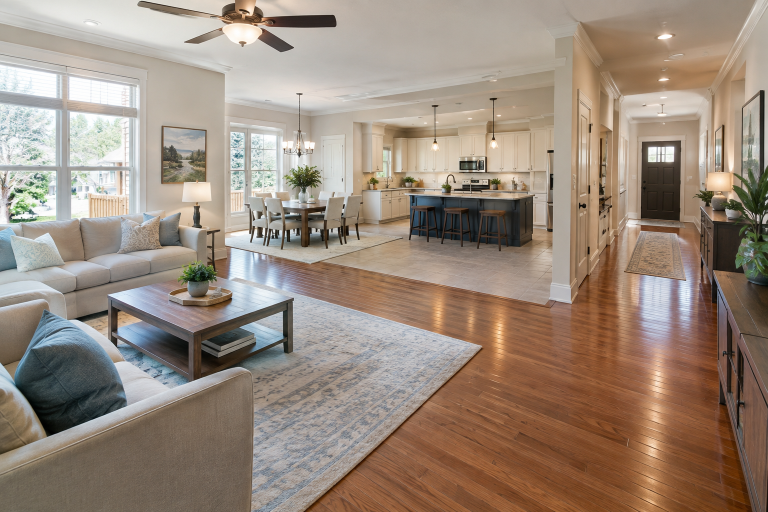
Hardwood is a popular choice for living rooms, dining rooms, bedrooms, hallways, and open-concept main floors because it provides a natural appearance and can often be repaired or refinished over time. Solid hardwood and engineered hardwood are different products, not automatic upgrades over one another. Engineered hardwood has a real wood surface over a layered construction, while solid hardwood is made from a single piece of wood. Wood responds to its environment. The way wood floors react to changing humidity is one reason acclimation, moisture testing, expansion allowances, and stable indoor conditions matter. Proper subfloor preparation and precise fitting help support long-term performance, while active leaks or recurring moisture problems should be corrected before installation.
When Luxury Vinyl or Laminate May Make More Sense
LVP can be a practical choice in kitchens, bathrooms, laundry rooms, hallways, and basements because many products are designed to resist moisture and are relatively simple to maintain. It is also available in a broad range of wood-look styles. However, waterproof flooring does not stop water from reaching an unaddressed plumbing leak, a damp concrete slab, or a damaged subfloor. Laminate can provide a durable, wood-inspired look for bedrooms, offices, living rooms, and other lower-moisture spaces. Water resistance varies by product, so homeowners should review the manufacturer’s requirements rather than treating every laminate floor as suitable for bathrooms or standing water. Both laminate and LVP need a clean, flat, stable installation surface for the best result.
Why Subfloor Preparation Is Essential
A finished floor can only perform as well as the surface beneath it. Before installation, the flooring team should evaluate the existing floor and subfloor for moisture, uneven areas, movement, squeaks, damage, and compatibility with the selected material.
- Inspect the room and measure the installation area.
- Check the subfloor for flatness, stability, and moisture concerns.
- Address needed removal, repairs, leveling, or moisture mitigation.
- Plan thresholds, trim, transitions, door clearances, and expansion space.
- Install the flooring according to the product’s specifications.
- Complete a final walkthrough to review fit, finish, and overall appearance.
Can Existing Hardwood Be Refinished?
Refinishing may be an option when a hardwood floor is structurally sound but has dullness, surface scratches, faded areas, worn traffic paths, or an outdated stain color. Sanding removes the worn finish and prepares the surface for a new stain and protective coats. An on-site assessment is important because severe water damage, loose boards, structural movement, or a floor that has already been sanded too many times may require repair or replacement instead.
Manage Moisture Before It Manages Your Floor
Indoor moisture control supports both flooring performance and the home itself. The EPA advises keeping indoor relative humidity below 60 percent, ideally between 30 and 50 percent when possible, as part of managing moisture concerns. Homeowners should address leaks, condensation, wet areas, drainage issues, and ventilation problems before installing new flooring, particularly in bathrooms, basements, crawl-space-adjacent rooms, and spaces over concrete.
What to Expect From the Installation Process
Artisan Flooring of NC can guide homeowners from material selection through final installation. The process can include reviewing samples in the home, discussing the room’s traffic and moisture exposure, evaluating the subfloor, selecting hardwood, engineered wood, LVP, laminate, or waterproof flooring, and completing the installation with appropriate trim and transitions. A final inspection allows homeowners to review the completed work and receive material-specific care guidance.
Service Areas Across the Triangle
Artisan Flooring of NC serves Raleigh-area homeowners throughout Wake, Durham, Orange, Chatham, and Franklin counties. Communities served include Raleigh, Cary, Apex, Durham, Chapel Hill, Morrisville, Wake Forest, Holly Springs, Fuquay-Varina, Knightdale, Hillsborough, Pittsboro, and Youngsville.
Questions to Ask Before Approving a Flooring Project
- Which flooring material best fits this room’s moisture and traffic conditions?
- Does the proposal include removal, disposal, furniture moving, trim, and transitions?
- Will the subfloor need leveling, repair, or moisture mitigation?
- What acclimation, installation, finishing, and curing time is required?
- What maintenance products and cleaning methods are appropriate for the selected floor?
- What do the material and artistry warranties cover?
Frequently Asked Questions
Does Artisan Flooring of NC sell flooring and install it?
Yes. The company offers hardwood and engineered flooring, luxury vinyl, laminate, and waterproof flooring, as well as installation, repair, sanding, and refinishing services.
Is LVP better than hardwood?
Neither is better for every room. LVP may be more practical where spills and moisture are common, while hardwood may be preferred where natural character, repair potential, and a traditional appearance are priorities.
How long does flooring installation take?
Timing depends on the material, square footage, subfloor preparation, acclimation needs, finishing requirements, and curing time. A detailed on-site review is the best way to establish an accurate project schedule.
Conclusion
Choosing the right flooring for a Raleigh home starts with understanding how each room is used and what conditions the floor will face. Hardwood can provide lasting character and refinishing potential in suitable areas, while LVP, laminate, and waterproof options may offer practical solutions for spaces exposed to moisture, spills, and heavier traffic. The condition of the subfloor, moisture levels, installation requirements, and overall project costs should also be considered before making a decision. For existing hardwood, repair or refinishing may provide an alternative to complete replacement when the floor remains structurally sound. By focusing on both performance and appearance, homeowners can select flooring that fits their lifestyle, supports long-term use, and creates a comfortable, cohesive look throughout the home.



One Comment